At first look, both images seem almost the same, each showing a charming yellow house with a red roof and a beautifully arranged garden. However, hidden within these matching scenes are small visual changes waiting to be discovered. Your task is straightforward yet challenging: identify three differences between the two images in just 10 seconds.
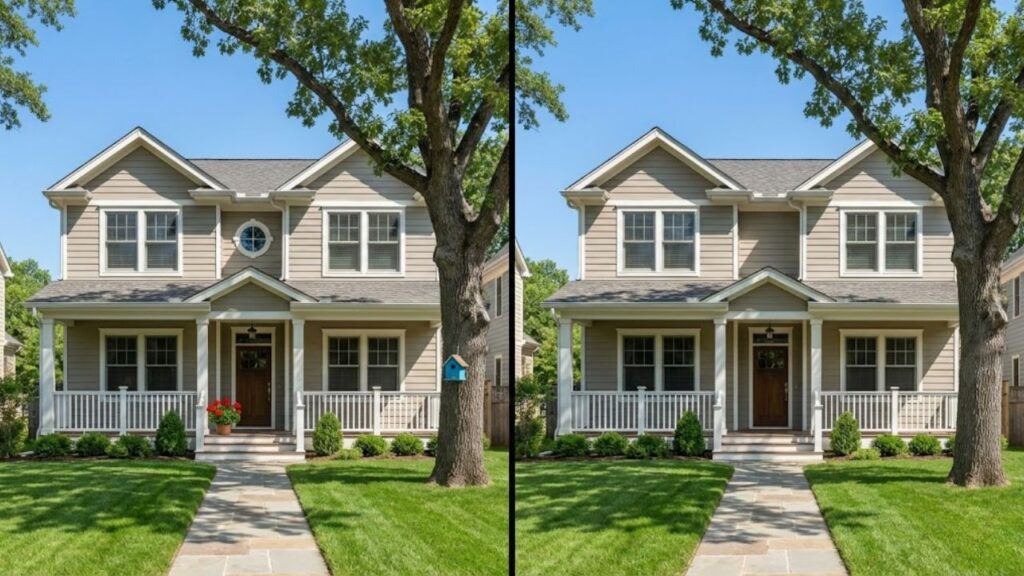
While the challenge may sound simple, the strong visual similarity between the images combined with time pressure can make it surprisingly difficult. Spot-the-difference puzzles are designed to test observation skills, sharpen focus, and improve how quickly the brain processes visual information. Are you ready to give it a try?

How Spot-the-Difference Puzzles Benefit Your Brain
These visual challenges offer more than just entertainment. Regularly engaging with spot-the-difference puzzles can support mental sharpness and cognitive development in several important ways:

- Sharper Attention to Detail: Searching for subtle changes trains your brain to notice small details that are often overlooked.
- Faster Visual Processing: Working against the clock improves how quickly your brain interprets visual cues.
- Improved Focus and Concentration: Sustained attention is required, helping reduce distractions.
- Stronger Problem-Solving Skills: Identifying differences enhances logical thinking and pattern recognition.
Effective Strategies to Solve the Puzzle Faster
With only 10 seconds available, staying calm and organized is key. Using a clear approach can significantly improve your chances of success:
- Scan the Entire Image Quickly: Start with a fast overview to understand the general layout.
- Divide the Scene into Sections: Focus separately on areas like the sky, the house, and the garden.
- Look for Small Changes: Differences are often subtle, such as missing objects or shifted elements.
- Move Fast but Stay Methodical: Avoid spending too long on one area.
- Practice Regularly: Consistent practice improves both speed and accuracy.
Explaining the Three Hidden Differences
Now that you know how to approach the challenge, here is a clear breakdown of the three differences between the left and right images. Although both pictures feature the same house, these small changes make them unique:
1. A Missing Cloud in the Sky
In the left image, a small cloud appears close to the roofline. This cloud is completely absent in the right image.
2. One Less Lamp Between the Doors
The left image shows two wall lamps placed between the doors. In the right image, one lamp is missing.

3. An Additional Bush in the Garden
In the bottom-right area of the garden, the right image contains an extra small bush that does not appear in the left image.
Why These Puzzles Can Be Deceptively Hard
Spot-the-difference puzzles are challenging because the brain naturally focuses on similarities rather than differences. When images closely resemble each other, minor changes become harder to detect. Adding time pressure increases the difficulty, forcing quicker decisions and sharper focus.
These puzzles take advantage of visual perception habits, encouraging the brain to adapt and improve detail recognition over time.
Final Thoughts on Training Your Observation Skills
Finding three differences in just 10 seconds is a fun yet demanding mental exercise that strengthens focus, visual awareness, and critical thinking. Whether you spotted all the differences or missed a few, each attempt helps sharpen your skills.

With regular practice, these puzzles become easier and more enjoyable. Over time, you may notice improvements not only in puzzle-solving but also in everyday attention to detail.