The mat feels steady beneath you as your body lines up and your breathing finds its rhythm. For many people in the United States, the plank is seen as a simple, universal exercise, yet the question always returns: how long should you really hold it? The answer isn’t fixed, because your body changes with age, lifestyle, and daily stress. What challenges you at 25 feels very different at 45 or 65. Understanding plank hold time is less about chasing numbers and more about respecting how your core supports movement right now.
Understanding Ideal Plank Hold Time
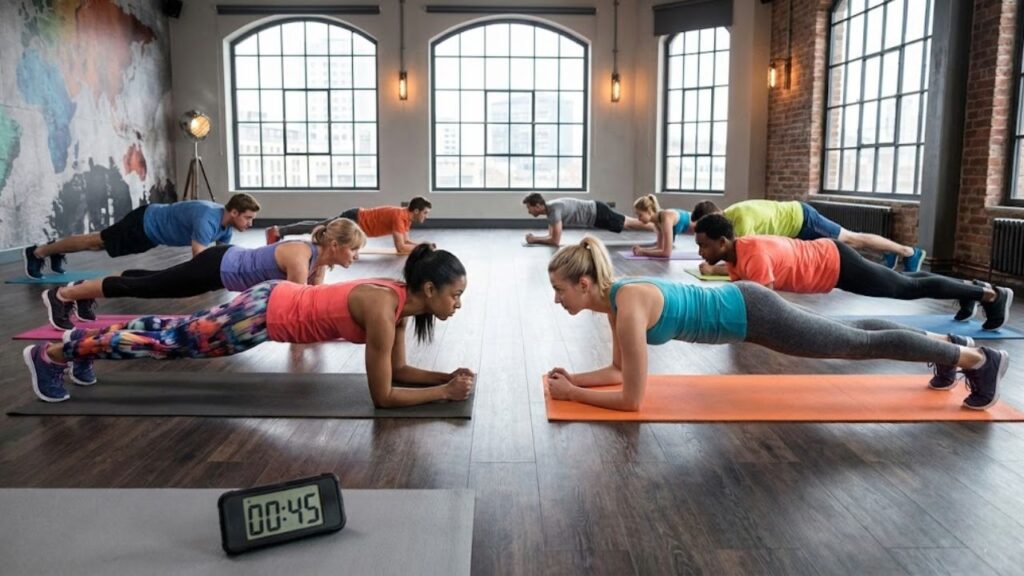
Planks look still from the outside, but inside your body, a lot is happening at once. Your deep core muscles activate quietly, creating deep core support that protects your spine. Breath links effort with control, building steady muscular engagement rather than explosive force. Because nothing moves, quality matters more than duration. A short, focused hold that maintains clean body alignment delivers more benefit than a longer one filled with strain. Over time, consistent practice builds functional core strength that translates into everyday stability.

Why Longer Plank Holds Aren’t Always Better
Fitness culture often celebrates extreme plank times, but longer doesn’t always mean stronger. Once fatigue sets in, the body compensates, turning effort into endurance discomfort training rather than useful strength. Research-backed coaching favors repeated short holds that maintain spinal safety focus and calm breathing. Pushing past form breakdown increases the risk of subtle injury buildup, especially as the years pass. Instead of chasing records, aim for holds that reinforce sustainable strength gains without unnecessary stress.

Age-Based Plank Hold Guidelines
As the body ages, gravity and recovery change the equation. Younger adults may handle longer holds with ease, while later decades benefit from shorter, precise efforts. These ranges act as flexible time markers, not strict rules. The goal is stopping just before posture slips, preserving joint-friendly control. Modified versions support smart movement longevity and encourage consistency. Above all, listening to physical cues builds long-term core resilience that adapts across life stages.
Listening to Your Body During Planks
Your body signals clearly when a plank shifts from helpful to harmful. Sagging hips, tight shoulders, or held breath indicate early form breakdown. Pausing at that moment supports neuromuscular efficiency rather than collapse. Over time, this mindful approach strengthens awareness and promotes injury-conscious training habits. Planks then become a daily practice instead of a test, encouraging confident movement support in routine tasks and posture.
| Age Group | Suggested Hold Time | Sets | Weekly Frequency |
|---|---|---|---|
| Teens (13–19) | 20–40 seconds | 2–4 | 2–4 days |
| 20s–30s | 30–60 seconds | 2–4 | 3–5 days |
| 40s | 20–45 seconds | 2–4 | 3–4 days |
| 50s+ | 10–40 seconds | 2–3 | 2–4 days |
Frequently Asked Questions (FAQs)
1. How long should beginners hold a plank?
Beginners should start with 10–20 seconds using controlled form.

2. Is holding a plank longer always better?
No, quality alignment matters more than total time held.
3. Can older adults still benefit from planks?
Yes, shorter or modified planks still strengthen core stability.
4. How often should planks be practiced?
Most people benefit from practicing planks two to five times weekly.